
Suffolk Court Records After Arrest
Court records after a jail arrest in Suffolk, Virginia are not the same as the jail booking record. Booking records show that a person was processed into custody, often through Western Tidewater Regional Jail. Court records show what happened next: whether the case was filed in General District Court, Juvenile and Domestic Relations District Court, or Circuit Court, what charges were filed, and what status the court entered.
The body of a criminal case usually starts with a warrant, complaint, summons, information, or indictment. The prosecutor's office can amend or dismiss charges as the case develops. Suffolk Commonwealth's Attorney Narendra Pleas handles felonies, certain misdemeanors, DUI, domestic violence, school crimes, and misdemeanor or traffic appeals. Custody questions still belong with WTRJ or the roster path, and booking-photo questions belong with Suffolk jail mugshots.
Suffolk Sheriff David Miles may be relevant to courthouse security and sheriff functions, but court records after arrest are maintained through the Virginia court system and local court clerks. For local court office context, use the City of Suffolk Courts and Legal Services page.
Find Suffolk Court Records
The main statewide starting point is the Virginia court case information hub. From there, searches may lead to the General District Court system or the Circuit Court case information entry. Suffolk criminal matters can move across court levels, so a name search in only one court can miss an appeal, indictment, or felony transfer.
The court case information source below is relevant because Suffolk court records after a jail arrest are tracked by the state court system once charges are filed.
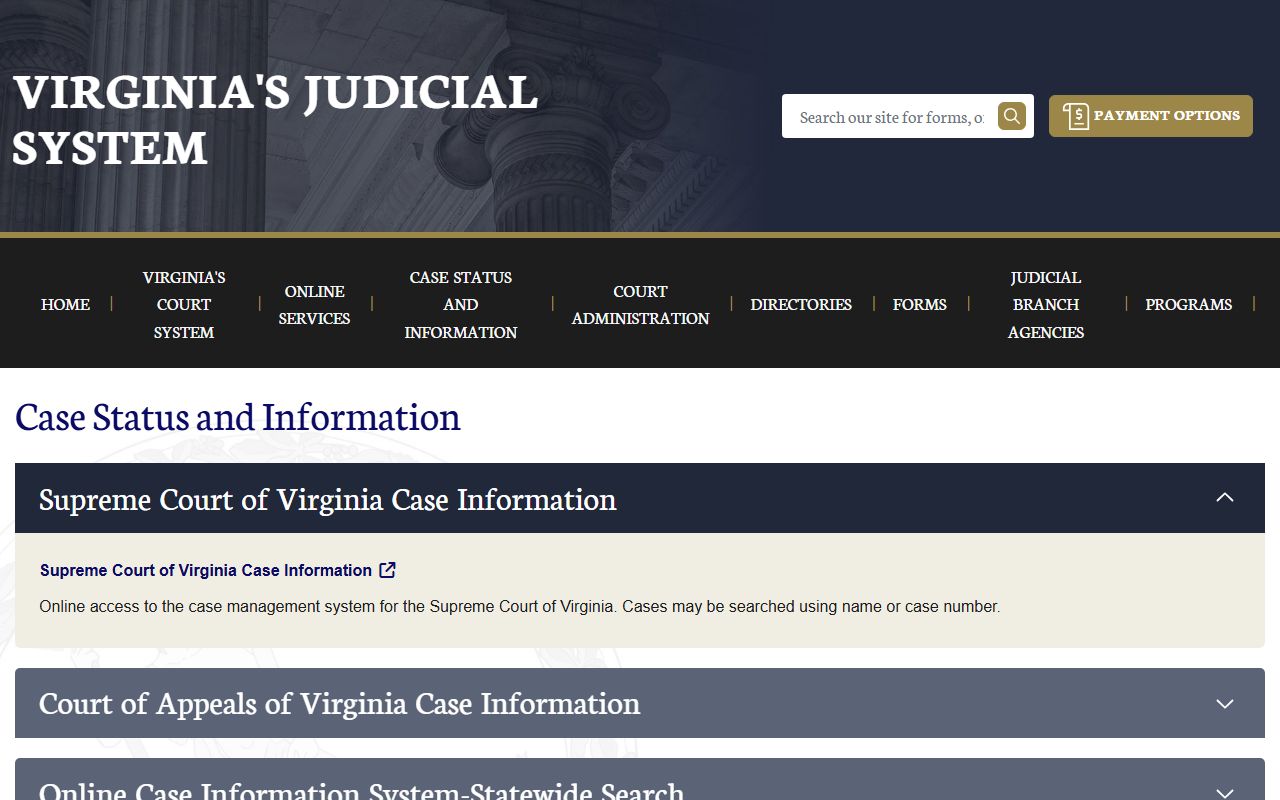
Use the court hub to choose the correct search system before relying on a result as the complete case picture.
- Open the Virginia court case information hub and choose the court level that fits the case.
- Search by defendant name, case number, or hearing date if those details are known.
- Select Suffolk or the correct locality when the system asks for court or locality.
- Open each matching case and compare charge text, dates, and court level.
- Call the court clerk when a result is missing, sealed, too new, or unclear.
Suffolk Court Search Fields
Court case search fields are narrow for a reason. A court system is built around filed cases, not a full arrest narrative. Name and case number are the strongest fields, while hearing date can help when a name is common or when the case was recently continued.
| Field | Use | Notes |
|---|---|---|
| Court or locality | Selects Suffolk or the court that holds the record. | Use the court named on a summons, warrant, or bond paper when available. |
| Name | Finds cases by defendant name. | Try legal name, spelling variants, and narrower court filters. |
| Case number | Finds a known case directly. | Best when copied from a court notice or clerk record. |
| Hearing date | Filters cases with a scheduled appearance. | Useful after first appearance or bond hearing information is known. |
| Disclaimer acceptance | Required before search access. | Read the public-access limits before using the result. |
The Virginia General District Court search is especially common for misdemeanors, traffic matters, first appearances, and preliminary stages of some felony matters. Circuit Court information may be needed for indictments, felony trial settings, and appeals.
Suffolk Arrest Charging Documents
A jail booking charge can be the officer's arrest charge, while a court charge is the charge filed or accepted into court. The difference matters. A person can be booked on one description, then face amended, reduced, added, or dismissed charges once the prosecutor and court process the case.
| Document | Who Uses It | What It Does |
|---|---|---|
| Complaint or warrant | Law enforcement, magistrate, or prosecutor path | States the accusation that begins or supports the criminal case. |
| Information | Prosecutor | Files formal charges without using a grand jury indictment for that step. |
| Indictment | Grand jury and prosecutor | Moves a felony charge into Circuit Court for prosecution. |
The Suffolk Commonwealth's Attorney page identifies the local prosecutor's office and its case areas. The office address is 150 North Main Street, and the main phone is 757-514-4365. Prosecutor records are not the same as public court docket entries, so use the court system first for docket status.
The prosecutor page below is a local source for the office tied to Suffolk criminal charging decisions after arrest.
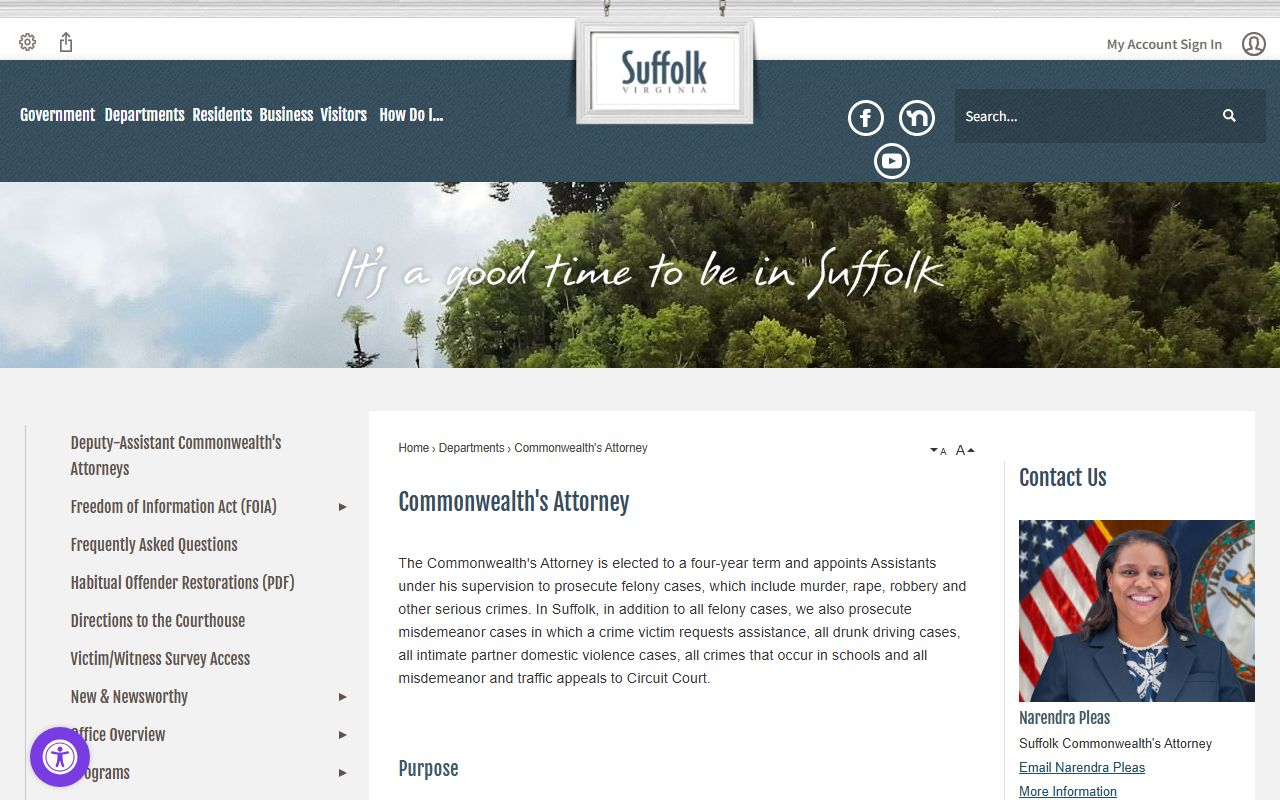
When the court case and prosecutor record differ, the clerk's current docket is usually the best public-facing status source.
Suffolk Charge Status Terms
Charge status can change more than once after a jail arrest. A docket may show a pending charge, a reduced charge, a dismissal, a nolle prosequi entry, or a conviction after plea or trial. These status terms should be read with the hearing date and court level because a case can be appealed or refiled in another court.
| Status | Plain Meaning | Record Caution |
|---|---|---|
| Pending | The court case has not reached final disposition. | Do not treat it as a conviction. |
| Amended or reduced | The filed charge changed from the first version. | Compare the original arrest wording with the current court charge. |
| Dismissed | The court ended that charge without a conviction. | Other charges in the same case may still remain. |
| Nolle prosequi | The prosecutor chose not to proceed on that charge at that time. | It is not the same as an acquittal. |
| Conviction | A guilty plea or finding was entered. | Check sentence, appeal status, and later orders. |
Suffolk Arrest Bond Records
Bond and release details often appear near the line between jail records and court records. A magistrate or judge may set bond after arrest, and WTRJ may keep custody records showing whether the person remains held. The court record may show bond motions, conditions, and hearing dates, but the jail is the source to confirm present physical custody.
- PR bond
- Release on personal recognizance, meaning the person promises to appear without posting money.
- Surety bond
- A bond posted through a bondsman or approved surety under court-set terms.
- Detainer
- A hold or request from another agency that can keep a person in custody even after a local bond issue is resolved.
- Remand
- A court order sending a person back into custody.
For current custody after a bond event, use Suffolk jail inmate records or call WTRJ. For bond language in a case, use the court docket and clerk contacts.
Suffolk Charges vs Convictions
An arrest charge is an accusation. A conviction is a final result after a plea, trial finding, or other court action that enters guilt. Court records after a jail arrest may include both charge text and final disposition, so the status column matters as much as the charge name.
| Point | Charge | Conviction |
|---|---|---|
| Stage | Begins as an accusation after arrest or filing. | Comes after a guilty plea, verdict, or qualifying finding. |
| Proof | Based on probable cause or a charging decision. | Requires proof accepted by the court. |
| Public meaning | Shows what was alleged. | Shows the case outcome for that count. |
| Record check risk | Can be mistaken for guilt if read carelessly. | Can still be affected by appeal, expungement, or later orders. |
Important: A public case lookup is not an FCRA consumer report and should not be used for hiring, housing, credit, or insurance decisions.
Suffolk Sealed Expunged Records
Virginia court public case information can be limited by sealing, expungement, juvenile confidentiality, and active-case rules. Sealing restricts public access to a record. Expungement is a court process that can remove eligible arrest or charge records from normal public access. Eligibility depends on the case result and court order, not on a person's preference.
| Point | Sealed | Expunged |
|---|---|---|
| Public access | Hidden or restricted from ordinary public view. | Removed from normal public access after a qualifying order. |
| Who can see it | Limited agencies or court users may still have access. | Access is more restricted, subject to Virginia law and court orders. |
| Common trigger | Confidential case type, court order, or protected record category. | Eligible dismissal, acquittal, mistaken identity, or other qualifying path. |
| Where to ask | Clerk of the court holding the case. | Clerk and legal counsel for the expungement process. |
Suffolk Circuit Court Clerk can be reached at 757-514-7800, the Criminal Division at 757-514-7814, General District Court at 757-514-4822, and Juvenile and Domestic Relations District Court at 757-514-7768. Court staff can describe access and filing procedures, but they cannot provide legal advice.
Suffolk Court Record Gaps
If a court search does not show the needed record, use the clerk first for court docket access. Use the City of Suffolk JustFOIA portal for city records and the Commonwealth's Attorney FOIA page for prosecutor-office public-record requests. The Commonwealth's Attorney FOIA officer is Donald Gayle at 757-514-4389.
Virginia FOIA is useful for agency records, but it does not turn every prosecutor file, juvenile matter, sealed case, or active investigation record into a public document. A FOIA response can also take time. The city FOIA page lists the general five working day response period and possible seven working day extension for city requests.